
business
How Much Does It Cost to Open a 10BBL Brewery?

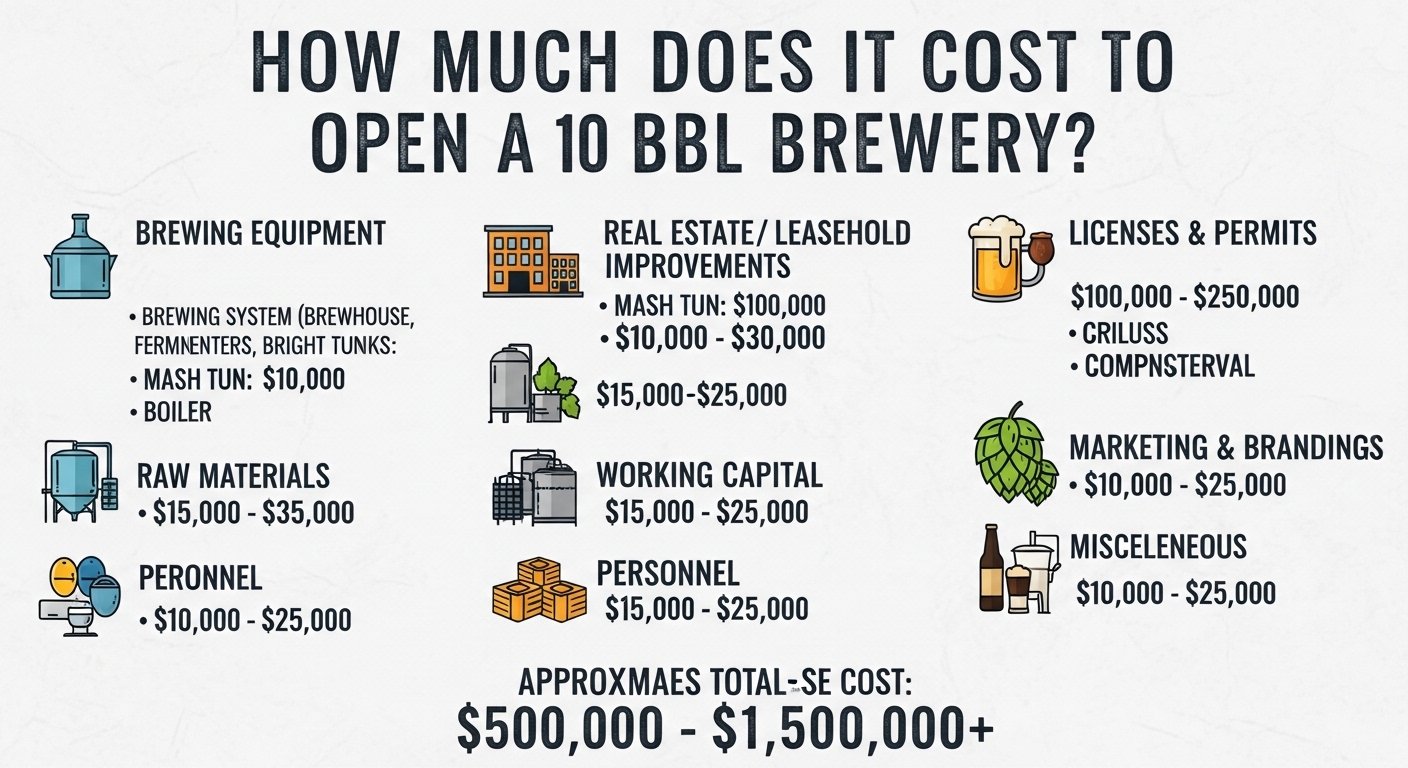
The 10-barrel (BBL) brewery is often considered the “sweet spot” of the craft beer industry. At roughly 310 gallons per batch, it is large enough to support a robust taproom and light local distribution, yet small enough to be managed by a lean team. However, moving from a passionate homebrewer or a small-scale pilot system to a commercial 10BBL facility is a massive financial leap.
Estimating the cost of such an endeavor is complex because no two breweries are identical. Factors such as geographic location, building condition, beer styles, and packaging goals can swing the budget by hundreds of thousands of dollars. On average, a 10BBL brewery requires an investment ranging from $350,000 to $850,000, with many high-end or large-scale taproom builds exceeding $1 million. This article provides a comprehensive breakdown of where those dollars go.Beer Brewery Equipment Manufacturer | Find Your Brewing Solutions!
The Core Investment: Brewhouse and Cellar Equipment
The “stainless” is usually the most significant upfront cost. For a 10BBL system, you aren’t just buying a large kettle; you are buying an interconnected ecosystem of vessels, pumps, and controllers.
The Brewhouse ($120,000 – $220,000)
A 10BBL brewhouse typically consists of a Mash Tun, a Lauter Tun, a Brew Kettle, and a Whirlpool. You can opt for a 2-vessel system to save space and money, but many commercial brewers prefer a 3-vessel setup to allow for back-to-back brewing days.
- Heating Source: You must choose between direct fire, electric, or steam. Steam is the most expensive to install (due to the boiler) but offers the most consistent heat and prevents scorching.
- Automation: A basic manual manifold system is cheaper, while a fully automated touchscreen PLC system that controls pump speeds and temperatures will add $30,000 to $50,000 to the price.
The Cellar ($80,000 – $150,000)
Your cellar capacity determines how much beer you can actually sell. A 10BBL brewhouse is useless if you only have two 10BBL fermenters. A standard starting cellar for this size usually includes:
- Four to Six 10BBL or 20BBL Fermenters: Using 20BBL fermenters (double-batching) is a common way to scale production without taking up much more floor space.
- One or Two Brite Tanks: These are used for carbonating and clarifying beer before packaging.
Infrastructure and Build-Out: The Hidden Giant
Many first-time brewery owners underestimate the “bricks and mortar” costs. Transforming a standard warehouse or retail space into a food-grade production facility is expensive.
Flooring and Drainage ($30,000 – $70,000)
Brewery floors take a beating from heavy tanks, acidic cleaners, and constant moisture. You cannot use standard concrete.
- Epoxy or Urethane Grout: A high-quality urethane cement coating is required to protect the slab.
- Trench Drains: You will need to cut into the existing slab to install stainless steel trench drains. Plumbers often charge a premium for this work due to the labor-intensive nature of concrete cutting and sloping.
Plumbing and Mechanical ($40,000 – $90,000)
A brewery is essentially a giant plumbing project. You need high-pressure water lines, natural gas for the boiler or burners, and a complex network of glycol lines to cool your tanks.
- The Glycol Chiller: A 10BBL system requires a robust industrial chiller (usually 7.5 to 10 HP). The chiller itself might cost $15,000, but the insulated piping (the “glycol loop”) installed throughout the ceiling can cost just as much in labor and materials.
Electrical Upgrades ($15,000 – $40,000)
Most commercial spaces do not have the 3-phase power required for industrial pumps, chillers, and grain mills. Upgrading your electrical panel and running drops to every pump and controller is a significant expense.
Utilities and Auxiliary Equipment
Beyond the tanks, several secondary systems are mandatory for operation.
The Steam Boiler ($25,000 – $50,000)
If you choose a steam-powered brewhouse, the boiler is a major line item. This includes the unit itself, the water feed system, the blowdown tank, and the expensive high-pressure steam piping that must be installed by certified welders.
Water Treatment ($5,000 – $15,000)
Beer is 90% water. If your local water has high chlorine, chloramines, or unbalanced minerals, you will need a commercial-grade charcoal filtration system or a Reverse Osmosis (RO) system.
Grain Handling ($10,000 – $25,000)
For a 10BBL system, you will be processing roughly 600–800 lbs of grain per batch.
- Malt Mill: A two-roll mill to crush the grain.
- Auger System: To move the grain from the mill to the mash tun. Without an auger, you will be carrying heavy bags up a ladder, which is a major safety and labor concern.
Packaging: Kegging, Canning, and Bottling
How you plan to sell your beer dictates this part of the budget.
Kegging ($15,000 – $30,000)
Even if you only sell in your taproom, you need kegs. A fleet of 100–200 stainless steel kegs is a standard start for a 10BBL brewery. You also need a manual or semi-automated keg washer to ensure they are sterile.
Canning ($40,000 – $120,000)
If you plan to sell 4-packs in local liquor stores, a canning line is a necessity. While mobile canning services exist, owning a small, semi-automated line (like those producing 15–30 cans per minute) provides better long-term margins but requires significant upfront capital.
The Taproom: The Profit Engine
For most 10BBL breweries, the taproom is where the majority of the profit is made. Build-out costs here vary wildly based on your aesthetic.
Bar and Seating ($30,000 – $100,000)
This includes the bar construction, draft towers, stools, tables, and lighting.
- Cold Room: You need a walk-in cooler to store kegs and keep them at serving temperature. A 15×20 foot walk-in cooler can cost $15,000 to $25,000 plus installation.
- Draft System: The lines, regulators, and taps that bring the beer from the cold room to the bar.
Point of Sale (POS) and Signage ($5,000 – $15,000)
Modern software for inventory tracking and sales, along with exterior and interior branding.
Soft Costs: The Paperwork and Reserves
You will likely spend $50,000 before you ever turn on a burner.
- Licensing and Legal ($5,000 – $15,000): TTB federal permits, state liquor licenses, and local zoning permits.
- Architectural and Engineering ($10,000 – $30,000): You need stamped drawings for plumbing, electrical, and structural changes to get your building permits.
- Initial Inventory ($10,000 – $20,000): Your first چند batches require bulk malt, hops, yeast, and CO2.
- Working Capital ($50,000 – $100,000): You should have at least 6 months of operating expenses (rent, utilities, insurance, payroll) in the bank. Most breweries do not turn a profit in their first year.
Total Estimated Budget Table (10BBL Brewery)
Category Low Estimate High Estimate Brewhouse Equipment $120,000 $220,000 Cellar Tanks (FVs/BBTs) $80,000 $150,000 Flooring & Drainage $30,000 $70,000 Plumbing, Glycol, & Mech $40,000 $90,000 Electrical Upgrades $15,000 $40,000 Utilities (Boiler/Water) $30,000 $65,000 Cold Room & Draft System $25,000 $50,000 Packaging (Kegs/Canning) $20,000 $150,000 Soft Costs & Licensing $20,000 $50,000 Total Estimated Cost $380,000 $885,000
Strategies for Cost Control
If the numbers above look daunting, there are ways to mitigate the initial “sticker shock.”
1. Phased Cellar Growth
You don’t need all your fermenters on day one. Start with three or four tanks and leave “stubs” in your glycol line and space on your floor to add more as your sales grow. This can save you $50,000 in your first year.
2. Used Equipment
Tanks are essentially big stainless steel thermoses. If they have been maintained well, a used 10BBL tank is almost as good as a new one. However, be wary of used brewhouses or canning lines, as these have moving parts and electronics that can be expensive to repair.
3. Direct-Fire Heating
Choosing a direct-fire kettle (using a gas burner underneath) instead of a steam boiler system can save $40,000 to $60,000 in equipment and installation costs. The trade-off is a slightly higher risk of scorching the wort and less efficiency, but for many 10BBL start-ups, this is a viable path.
Why Choose Micet for Your 10BBL Journey?
When investing hundreds of thousands of dollars, the quality of your stainless steel is your most important insurance policy. Micet is a premier manufacturer of brewing systems, specifically tailored to the needs of craft entrepreneurs.
Micet’s 10BBL systems are renowned for their balance of high-end engineering and competitive pricing. When you choose Micet, you benefit from:
- Precision Engineering: Every 10BBL brewhouse is designed for maximum extract efficiency, featuring laser-cut false bottoms and optimized kettle geometries.
- High-Grade Materials: Micet uses only certified 304 or 316L stainless steel, ensuring your tanks remain hygienic and structurally sound for decades.
- Customization and Support: Micet doesn’t just sell “standard” kits. They work with your architect and engineers to customize tank dimensions and port placements to fit your specific building.
- Global Expertise: With years of experience shipping and installing systems worldwide, Micet understands the logistical and technical requirements of getting a brewery up and running on time.
Choosing Micet means you are investing in equipment that will still be producing award-winning beer twenty years from now.
Frequently Asked Questions
1. How much square footage do I need for a 10BBL brewery?
For a 10BBL production area, you need approximately 1,500 to 2,500 square feet. If you add a taproom and a kitchen, you are looking at a total of 3,500 to 5,000 square feet. Always ensure your ceilings are at least 12–15 feet high to accommodate the height of 20BBL fermenters.
2. How many people does it take to run a 10BBL brewery?
At this scale, you typically need one head brewer and one assistant or cellar-person to handle production. The taproom will require a manager and a rotating staff of 4–8 part-time bartenders. Many owners act as the general manager and sales rep in the early days to save on labor costs.
3. How long does it take from ordering equipment to pouring the first pint?
Usually, it takes 9 to 14 months. This includes 3–5 months for equipment manufacturing and shipping, 3–4 months for the building build-out and permitting, and 1–2 months for test brewing and TTB formula approvals. Planning your equipment order early is vital to staying on schedule.
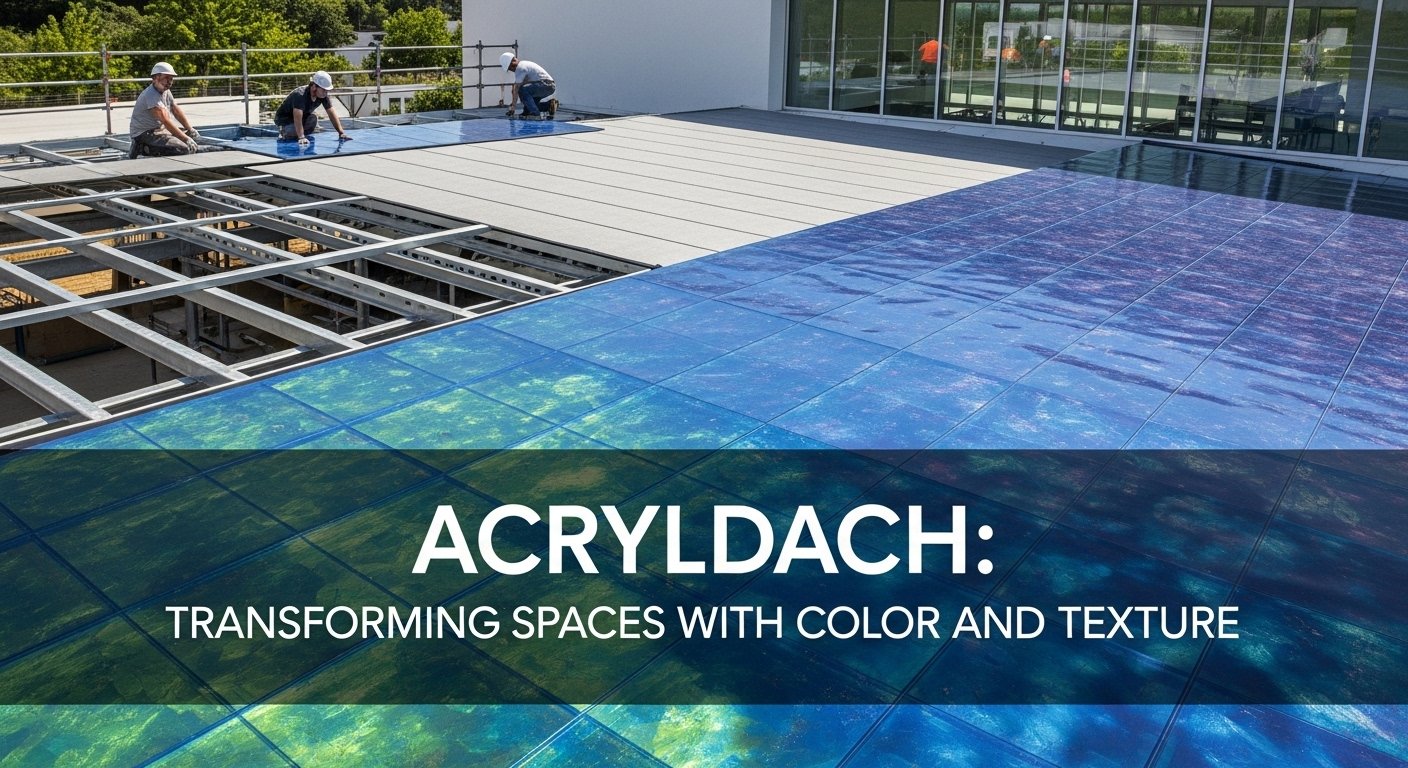
Acryldach is redefining the way we perceive interior and exterior spaces by offering a combination of color, texture, and durability that is hard to match. Its innovative formula allows surfaces to not only retain vibrant hues but also maintain their structural integrity over time. Unlike traditional coatings or paints, Acryldach provides a multidimensional finish that elevates both modern and classic interiors. By blending artistic creativity with practical benefits, Acryldach opens up possibilities for designers, homeowners, and businesses seeking a fresh approach to space transformation.
The versatility of Acryldach extends beyond aesthetics. It adapts to various surfaces, including wood, concrete, and metal, creating a seamless integration of design and function. Its ability to resist weathering, fading, and wear ensures that spaces remain visually appealing and structurally sound. In addition, Acryldach’s eco-conscious composition aligns with sustainable design principles, reducing environmental impact while enhancing indoor air quality. This makes it a preferred choice for projects where style and responsibility go hand in hand.
The Science Behind Acryldach Coatings
Acryldach is not merely a decorative element; it is rooted in advanced material science. Its polymer-based structure ensures adhesion, flexibility, and resistance to cracking, making it suitable for high-traffic areas and dynamic environments. The chemical composition also allows for layering, enabling designers to create depth and texture that traditional paints cannot achieve. By manipulating pigments and finishes, Acryldach provides the ability to customize environments for mood, lighting, and functionality.
Moreover, Acryldach’s formulation incorporates protective elements that defend against UV radiation and moisture infiltration. This characteristic is particularly beneficial for exterior applications where surfaces are exposed to sunlight, rain, or extreme temperatures. The long-lasting performance of Acryldach means reduced maintenance costs and longer intervals between recoating, which is appealing for both residential and commercial projects. The science behind it ensures that aesthetics never compromise performance, offering a perfect balance for transformative designs.
Enhancing Interiors with Colorful Expressions
Interiors take on a new life when treated with Acryldach. The product’s wide spectrum of colors allows for bold statements or subtle harmonies, creating spaces that evoke emotion and functionality. From living rooms and offices to creative studios, Acryldach transforms mundane walls into dynamic canvases. The interaction of light and color on its textured surfaces adds depth, highlighting architectural features and enhancing overall ambiance.
In addition to color, texture plays a crucial role in interior design. Acryldach offers finishes that range from smooth, reflective surfaces to rough, tactile patterns, allowing designers to play with sensory experiences. This combination of texture and hue can define focal points, guide movement within a space, or accentuate furniture and décor. The flexibility of Acryldach makes it ideal for experimenting with contemporary and traditional styles, resulting in interiors that are both visually appealing and personalized.
Transforming Exteriors for Lasting Impressions
Acryldach is equally powerful in exterior applications, turning ordinary façades into striking visual statements. Its weather-resistant properties protect surfaces from fading, moisture, and temperature fluctuations, making it an ideal solution for homes, commercial buildings, and public spaces. A well-chosen color palette paired with textured finishes can dramatically enhance curb appeal, conveying sophistication and attention to detail.
Beyond aesthetics, Acryldach improves the functional quality of exterior surfaces. Its coating can prevent minor surface erosion and minimize maintenance efforts, providing long-term savings. Additionally, the material’s reflective properties can improve energy efficiency by moderating heat absorption, making it a sustainable option for climate-conscious projects. The durability, coupled with the transformative visual impact, ensures that exteriors maintain their appeal for years, attracting attention and admiration.
Acryldach in Commercial and Public Spaces
Commercial and public spaces benefit greatly from Acryldach’s adaptability. Retail environments, hotels, and offices use it to create branded experiences, guiding customer perception and engagement through color psychology and design. The textured finishes help break monotony, contributing to a welcoming and inspiring atmosphere that encourages interaction and productivity.
Moreover, Acryldach’s resilient qualities are particularly advantageous in high-traffic areas. Its ability to resist scratches, stains, and impacts ensures that commercial spaces remain vibrant and professional despite heavy usage. Facility managers can also choose low-maintenance textures that are easy to clean without compromising aesthetics. By integrating Acryldach into design strategies, businesses and public institutions create memorable spaces that are functional, durable, and visually compelling.
Environmental Considerations and Sustainable Design
Acryldach is designed with sustainability in mind, reflecting the growing demand for eco-friendly building materials. Its water-based formulation reduces harmful emissions during application, contributing to healthier indoor air quality. Additionally, its long-lasting finish means fewer recoating cycles, which decreases the consumption of materials and energy over time.
The environmental benefits extend to energy efficiency as well. By reflecting sunlight and moderating heat absorption, Acryldach-coated surfaces can reduce reliance on artificial cooling, cutting energy costs. The material’s eco-conscious profile does not compromise its aesthetic versatility, allowing designers to create beautiful, responsible spaces. By choosing Acryldach, individuals and businesses can meet environmental standards without sacrificing style or creativity.
Combining Color, Texture, and Personal Expression
The true appeal of Acryldach lies in its ability to merge color, texture, and personal expression. Every space becomes a canvas where creativity meets functionality. Whether through dramatic contrasts or harmonious blends, Acryldach allows for experimentation that can redefine spatial perception and user experience. This level of personalization is unmatched by traditional paints and coatings.
Designers and homeowners alike appreciate how Acryldach accommodates diverse tastes and applications. By layering colors, mixing textures, and incorporating artistic techniques, spaces can reflect individual identity and purpose. From subtle elegance to bold statements, Acryldach provides the tools to transform mundane environments into immersive experiences. The combination of aesthetic freedom, durability, and sustainability makes it a revolutionary choice for those who value quality and innovation.
Acryldach Application Techniques and Best Practices
Applying Acryldach requires careful consideration to achieve optimal results. Surface preparation is key, ensuring cleanliness, dryness, and smoothness to maximize adhesion. Various application tools such as brushes, rollers, and sprayers can create distinct effects, while layering techniques add depth and dimension. Proper curing time between coats enhances longevity and maintains color vibrancy.
Furthermore, protective measures such as masking, ventilation, and controlled temperature contribute to both safety and quality. By following recommended practices, users can fully harness the potential of Acryldach, achieving finishes that are not only visually stunning but also durable. These best practices ensure that every project, whether small or large, benefits from the transformative qualities that Acryldach offers.
Future Trends and the Role of Acryldach
As design trends continue to evolve, Acryldach is poised to play a pivotal role in shaping contemporary spaces. Its ability to integrate technology, such as UV-resistant coatings and reflective surfaces, aligns with smart design and sustainable architecture. The trend toward personalized, immersive environments further elevates its relevance in residential, commercial, and public projects.
The future of Acryldach lies in continued innovation and adaptability. Designers are exploring combinations with other materials, experimenting with interactive textures, and leveraging color psychology to enhance user experience. With its unmatched versatility and performance, Acryldach is set to remain a cornerstone in modern design, inspiring spaces that are functional, beautiful, and sustainable.

In the ever-evolving landscape of software development, understanding the distinctions between various methodologies and frameworks is crucial for creating robust and efficient applications. One topic that has recently gained attention among developers and software architects is EDFvsDRV. These two approaches, while often mentioned together, serve different purposes and are applied in unique contexts within modern software systems. Exploring their differences, advantages, and ideal use cases can provide critical insights for both developers and project managers aiming to optimize system performance.
Understanding EDF and DRV
EDF, or Earliest Deadline First, is a dynamic scheduling algorithm primarily used in real-time systems. It focuses on task prioritization based on deadlines, ensuring that the task with the nearest deadline is executed first. In contrast, DRV, or Dynamic Rate Variation, emphasizes adjusting task execution rates dynamically according to system load or resource availability. While both methodologies aim to optimize system efficiency, they do so through fundamentally different mechanisms.
The distinction between EDF and DRV is essential for software designers who need to balance responsiveness, resource utilization, and predictability. By integrating these strategies appropriately, developers can achieve a more resilient system that adapts effectively to variable workloads.
Key Performance Differences Between EDF and DRV
Performance metrics are critical when choosing between EDF and DRV for software applications. EDF excels in environments where strict timing constraints are paramount, such as embedded systems or real-time operating systems. Its ability to prioritize tasks by deadlines ensures predictable response times and minimizes the likelihood of deadline misses. However, EDF can introduce overhead when task arrival rates are highly variable, and it may require complex scheduling mechanisms for large-scale systems.
DRV, on the other hand, shines in systems where workload and resource availability fluctuate frequently. By dynamically adjusting task rates, DRV can optimize CPU usage, reduce power consumption, and maintain throughput under variable loads. Unlike EDF, DRV focuses less on individual task deadlines and more on overall system efficiency and adaptability.
| Feature | EDF (Earliest Deadline First) | DRV (Dynamic Rate Variation) |
|---|---|---|
| Focus | Task deadlines | Task execution rate and system load |
| Ideal Environment | Real-time systems, embedded applications | Variable load systems, cloud computing |
| Resource Utilization | Can be less efficient under fluctuating loads | Optimizes resource usage dynamically |
| Predictability | High | Medium |
| Complexity | Moderate to high | Low to moderate |
Practical Applications of EDF in Modern Software
The use of EDFvsDRV in practical software scenarios highlights their distinct advantages. EDF is widely applied in real-time operating systems, industrial automation, and aerospace software, where meeting precise timing constraints is non-negotiable. In these contexts, tasks such as sensor monitoring, control loops, and communication protocols require deterministic scheduling. EDF provides a framework that ensures high-priority tasks are completed in time, minimizing risk and enhancing system reliability.
Software developers working with embedded devices or critical infrastructure systems often favor EDF due to its predictability. The scheduling algorithm allows for systematic testing, verification, and optimization of task execution timelines, which is crucial in safety-critical applications. Moreover, EDF integrates well with existing real-time operating systems like FreeRTOS, RTEMS, and VxWorks, offering mature tools and libraries for implementation.
Implementing DRV for Dynamic Software Environments
DRV is more applicable in scenarios where system load and resource availability are unpredictable. Cloud-based applications, large-scale data processing systems, and multimedia streaming services benefit from the flexibility offered by DRV. By dynamically adjusting execution rates, DRV helps prevent bottlenecks, optimizes power consumption, and maintains consistent performance under variable workloads.
For example, a cloud-based video transcoding service may implement DRV to adjust processing rates based on server load and incoming request rates. During peak demand, DRV ensures efficient distribution of resources, while during off-peak periods, it reduces unnecessary CPU usage, leading to cost savings and energy efficiency. In this way, DRV provides adaptive system behavior without the strict timing guarantees that EDF offers.
| Application Sector | EDF Implementation | DRV Implementation |
|---|---|---|
| Embedded Systems | Task control in automotive software | Rate adjustment in IoT devices |
| Aerospace | Flight control systems | Adaptive sensor data handling |
| Cloud Computing | Time-critical transaction scheduling | Load balancing and dynamic scaling |
| Multimedia Processing | Audio/video synchronization | Adaptive streaming rates |
Integrating EDF and DRV in Hybrid Systems
While EDF and DRV have unique strengths, modern software often benefits from hybrid approaches. Combining EDF’s deterministic scheduling with DRV’s dynamic adaptability allows systems to meet strict deadlines while remaining flexible under varying loads. For instance, an industrial IoT system may use EDF to manage critical control signals and DRV for non-critical monitoring tasks. This dual-layer strategy ensures reliability and efficiency without compromising either priority or performance.
Hybrid systems leveraging EDFvsDRV require careful design. Developers must identify which tasks are deadline-critical and which can tolerate flexible execution rates. Once identified, scheduling policies can be implemented to dynamically switch between EDF and DRV modes based on current system conditions. Such integration improves overall system robustness, minimizes downtime, and enhances resource utilization.
Challenges in EDFvsDRV Adoption
Despite their benefits, implementing EDF and DRV is not without challenges. EDF may suffer from scheduling overhead and complexity in systems with large numbers of tasks. DRV, while simpler to implement, can introduce unpredictability in time-sensitive applications. Understanding the trade-offs is critical for software engineers who aim to maximize the benefits of these approaches.
Additionally, testing and validation of EDF and DRV require different strategies. EDF systems demand rigorous deadline verification and timing analysis, whereas DRV systems need continuous monitoring of load variations and system responsiveness. Proper simulation and modeling tools are essential to ensure that implementations of EDFvsDRV meet performance expectations without unintended consequences.
Future Trends in EDFvsDRV Applications
Looking forward, the role of EDFvsDRV in software development is poised to grow. With the increasing prevalence of real-time analytics, autonomous systems, and AI-driven applications, the demand for efficient scheduling and resource management strategies will continue to rise. EDF’s reliability in timing-critical applications will remain valuable, while DRV’s adaptability will be critical in cloud computing, distributed systems, and energy-sensitive environments.
Moreover, advancements in hybrid scheduling frameworks and machine learning-driven scheduling algorithms are likely to enhance EDFvsDRV integration. Intelligent systems may dynamically determine the optimal balance between deadline adherence and resource optimization, further improving system performance in complex and unpredictable scenarios.
Conclusion
Understanding the distinctions and complementary strengths of EDFvsDRV is crucial for modern software developers and system architects. EDF provides deterministic scheduling and is ideal for real-time, safety-critical applications, while DRV offers flexibility and efficiency in dynamic environments. By carefully evaluating system requirements and combining both methodologies when appropriate, developers can achieve robust, adaptive, and high-performing software solutions.
The evolving landscape of software development will continue to demand innovative approaches to task scheduling and resource management. EDFvsDRV, whether implemented separately or in combination, offers powerful tools for meeting these challenges and ensuring that modern software systems operate efficiently under a variety of conditions.

In today’s competitive business landscape, finding a software solution that streamlines operations, enhances productivity, and supports growth is crucial. Software keepho5ll emerges as a transformative tool for businesses of all sizes, offering an intuitive platform that combines efficiency with adaptability. Unlike traditional software solutions that often require extensive training and time-consuming setups, Software keepho5ll provides a seamless experience that aligns with modern business needs, ensuring organizations remain agile and innovative.
The rise of digital transformation has pushed companies to explore tools that not only automate routine tasks but also provide actionable insights. Businesses leveraging Software keepho5ll have witnessed measurable improvements in operational efficiency, reporting accuracy, and team collaboration. Its advanced analytics capabilities allow leaders to make data-driven decisions, fostering a culture of informed strategy rather than reactive management.
Redefining Business Efficiency with Software keepho5ll
Efficiency is the backbone of every successful enterprise, and Software keepho5ll delivers a comprehensive suite of features designed to optimize workflows. From automated scheduling and task management to real-time reporting, this platform reduces the complexity of day-to-day operations. Companies no longer need to juggle multiple tools or rely on fragmented processes; Software keepho5ll centralizes essential functions under a single, intuitive interface.
One of the distinguishing aspects of Software keepho5ll is its adaptability. Businesses in different industries face unique operational challenges, and generic solutions often fall short. The software’s modular design allows organizations to customize features according to their specific needs, ensuring that every team member has access to relevant tools without being overwhelmed by unnecessary functions.
Enhancing Collaboration Across Teams
Team collaboration is a critical component of business success, and Software keepho5ll facilitates seamless communication among employees. Integrated messaging, project tracking, and shared calendars foster transparency and accountability. Employees can access updates in real-time, reducing the lag often associated with traditional email communication.
A table highlighting the collaboration features of Software keepho5ll within a corporate environment illustrates its practical benefits:
| Feature | Description | Impact on Team Productivity |
|---|---|---|
| Real-time Messaging | Enables instant communication among team members | Reduces delays in project execution |
| Shared Project Boards | Tracks task progress across departments | Improves accountability and workflow visibility |
| Integrated Calendar | Schedules meetings and deadlines seamlessly | Enhances time management and planning |
| Document Sharing | Central repository for all files | Ensures easy access and reduces redundancy |
These collaborative features ensure that businesses can operate with greater coherence, making Software keepho5ll an essential tool for companies aiming to achieve a unified work environment.
Data-Driven Decision Making with Software keepho5ll
In the modern business ecosystem, decisions backed by data are far more reliable than intuition alone. Software keepho5ll offers robust analytics and reporting tools that allow businesses to monitor key performance indicators (KPIs) and identify trends over time. From financial reporting to operational metrics, the software’s dashboards provide a comprehensive overview that is both insightful and actionable.
Businesses that adopt Software keepho5ll experience the advantage of predictive insights. The software’s intelligent algorithms analyze historical data to forecast outcomes, helping managers anticipate challenges and adjust strategies proactively. A table summarizing the reporting capabilities of Software keepho5ll demonstrates its value to decision-makers:
| Report Type | Use Case | Business Benefit |
|---|---|---|
| Financial Reports | Revenue, expenditure, and profit tracking | Supports budget planning and cost control |
| Operational Analytics | Workflow efficiency, task completion rates | Identifies bottlenecks and optimizes resources |
| Customer Insights | Purchase patterns, feedback analysis | Enhances marketing strategies and customer retention |
| Employee Performance | Task completion and engagement metrics | Drives team performance and professional growth |
With such extensive capabilities, Software keepho5ll empowers organizations to move from reactive to proactive business management, strengthening overall competitiveness.
Integrating Seamlessly with Existing Systems
One of the key challenges for any business software is integration. Many enterprises struggle with tools that are incompatible with their existing systems, leading to inefficiencies and increased costs. Software keepho5ll is designed for seamless integration, allowing businesses to incorporate the platform alongside existing software with minimal disruption.
Whether it is accounting systems, customer relationship management (CRM) tools, or project management platforms, Software keepho5ll ensures data flows smoothly across all channels. This integration minimizes duplication of effort, reduces errors, and allows teams to focus on high-value activities. The software’s ability to harmonize with current infrastructure makes it a practical solution for businesses seeking to modernize without overhauling their entire IT ecosystem.
Scalability and Future-Ready Solutions
Growth is a constant goal for businesses, and software must scale accordingly. Software keepho5ll supports scalability with flexible architecture that accommodates expanding teams, increased data volumes, and evolving business processes. Companies can start with essential modules and expand functionalities as required, making it a cost-effective solution for both small startups and large enterprises.
The software’s future-ready design ensures that businesses are not only equipped for current needs but are also prepared to adopt emerging technologies. Artificial intelligence (AI) enhancements, cloud-based solutions, and automated workflows are integrated thoughtfully to future-proof operations. A table demonstrating scalability features highlights how Software keepho5ll can grow with a business:
| Feature | Scalability Aspect | Business Advantage |
|---|---|---|
| Modular Architecture | Add or remove features as needed | Cost-effective adaptation to growth |
| Cloud-Based Storage | Handles increasing data volume | Ensures uninterrupted access and flexibility |
| AI-Powered Automation | Adapts to complex workflows | Reduces manual effort and increases accuracy |
| Multi-User Access | Supports expanding teams | Maintains productivity across departments |
By offering scalable solutions, Software keepho5ll ensures businesses can focus on growth without worrying about outgrowing their software capabilities.
Security and Compliance in Modern Business
In an era where data breaches and compliance issues can severely impact a business, security cannot be an afterthought. Software keepho5ll prioritizes robust security protocols, including encryption, access controls, and regular system audits. These measures protect sensitive information, ensuring that businesses meet regulatory requirements and maintain customer trust.
Compliance with industry standards is a critical benefit, especially for sectors such as finance, healthcare, and legal services. By embedding security within its architecture, Software keepho5ll reduces the risk of data loss, legal complications, and reputational damage. The following table outlines key security and compliance features:
| Security Feature | Purpose | Benefit |
|---|---|---|
| Data Encryption | Protects sensitive data at rest and in transit | Prevents unauthorized access |
| Role-Based Access | Restricts system access based on user roles | Enhances accountability and minimizes risk |
| Audit Logs | Tracks user activity and system changes | Supports regulatory compliance and monitoring |
| Backup and Recovery | Ensures data integrity and availability | Minimizes disruption in case of failures |
These features position Software keepho5ll as a reliable and secure platform for businesses that prioritize both efficiency and responsibility.
Cost-Effectiveness and ROI
Investing in software is a strategic decision, and businesses need tangible returns on investment (ROI). Software keepho5ll offers a cost-effective solution by combining multiple functions into a single platform, reducing the need for separate tools. Time saved through automation, enhanced team productivity, and improved decision-making translate into measurable financial benefits.
A table illustrating cost and ROI benefits provides a clear picture:
| Cost Aspect | Impact | ROI Benefit |
|---|---|---|
| Reduced Software Redundancy | Fewer subscriptions for multiple tools | Lower operational expenses |
| Automated Processes | Less manual labor required | Time savings and increased productivity |
| Data-Driven Decisions | Optimized strategies and resource allocation | Increased profitability |
| Scalable Pricing | Adjust subscription according to team size | Cost aligns with business growth |
By optimizing both operations and finances, Software keepho5ll ensures that businesses experience significant value without unnecessary expenditure.
Conclusion
Software keepho5ll stands out as an ultimate business solution due to its comprehensive feature set, seamless integration, collaborative tools, data-driven analytics, robust security, and scalability. It bridges the gap between traditional operational challenges and modern technological solutions, offering a platform that grows with your business while maximizing efficiency and performance.
For organizations aiming to remain competitive in a fast-paced market, adopting Software keepho5ll is not merely an option but a strategic imperative. Its ability to transform workflows, empower teams, and provide actionable insights ensures businesses are well-positioned for sustainable success. As the digital landscape evolves, Software keepho5ll continues to adapt, delivering a future-ready solution for every business need.
-

 Health5 months ago
Nerovet ai Dentistry: Transforming Diagnosis and Treatment
-
 Digital Marketing5 months ago
Facwe: The Impact on Modern Digital Communication
-

 Social Media5 months ago
Ironmartonline Reviews: What Real Customers Are Saying
-

 Technology4 months ago
Contact details reality-movement.org dor: How to Reach Out
-

 business5 months ago
Adswynk com: Revolutionizing Digital Advertising for Small Businesses
-

 Technology5 months ago
Voozon: What Sets It Apart in the Social Media Landscape?
-
 Celebrity6 months ago
Erny Huelke: How His Vision Continues to Inspire Today
-
 Fashion6 months ago
Fapell: Game Changer for Creators and Businesses