
Technology
The Prospective Risk Adjustment Coding Alert Accuracy Threshold That Determines Program Success or Failure


Your prospective risk adjustment coding program launches with sophisticated AI analyzing patient data and generating real-time alerts for providers during encounters. The alerts suggest documentation opportunities based on clinical indicators, lab values, and medication patterns.
Six months later, provider engagement is declining. Alert dismissal rates are climbing. Providers complain the system is noisy and unhelpful.
The problem isn’t your AI or your clinical logic. The problem is you didn’t establish and maintain the critical alert accuracy threshold that determines whether providers trust or ignore prospective systems.
Here’s the accuracy threshold that predicts program success and how to measure and maintain it.
The 70% Accuracy Threshold
Research across prospective risk adjustment coding implementations reveals a consistent pattern: provider engagement collapses when alert accuracy drops below 70%.
Alert accuracy means: of the alerts generated, what percentage are clinically appropriate and lead to legitimate documentation additions?
At 80%+ accuracy: Providers trust alerts. Engagement remains high. Completion rates stay above 60%.
At 70-80% accuracy: Providers cautiously trust alerts. Engagement moderate. Completion rates 40-60%.
At 60-70% accuracy: Provider trust declining. Engagement drops. Completion rates 25-40%.
Below 60% accuracy: Providers ignore alerts systematically. Engagement collapses. Completion rates below 20%.
Most organizations launch prospective programs at 75-85% accuracy. Over six months, accuracy degrades to 55-65% as clinical data changes, provider documentation patterns evolve, and alert logic isn’t updated. Provider engagement collapses in parallel with accuracy decline.
The False Positive Cost
Every false positive alert costs provider trust more than true positive alerts build trust.
True positive alert: Provider sees alert suggesting diabetic nephropathy. Provider reviews patient data, confirms nephropathy, documents it. Provider thinks: “Helpful reminder.”
False positive alert: Provider sees alert suggesting CHF. Provider reviews patient data, confirms patient doesn’t have CHF, dismisses alert. Provider thinks: “System doesn’t understand my patient.”
False positives accumulate. After dismissing 10 inappropriate alerts, providers stop trusting all alerts and dismiss reflexively without review.
Organizations that tolerate 40% false positive rates (60% accuracy) discover providers dismissing 90%+ of alerts after three months because trust is destroyed.
The Accuracy Measurement Challenge
Most prospective risk adjustment coding programs don’t systematically measure alert accuracy. They track alerts generated and completion rates but don’t track whether completed alerts were clinically appropriate.
Measuring accuracy requires sampling alerts and clinically evaluating appropriateness:
Pull 100 random alerts from last month. For each alert, clinical review determines: Was the alert clinically appropriate given patient data? Did the provider appropriately complete or appropriately dismiss?
Appropriate completion (true positive): Alert suggested diabetes complications, patient has documented complications, provider documented them.
Appropriate dismissal (true negative): Alert suggested CHF, patient doesn’t have CHF, provider correctly dismissed.
Inappropriate completion (false positive): Alert suggested condition, provider documented it to clear alert despite condition not being clinically present.
Inappropriate dismissal (false negative): Alert suggested condition, patient has condition, provider dismissed without documenting.
Accuracy calculation: (True positives + True negatives) / Total alerts sampled.
Organizations that implement monthly accuracy measurement discover accuracy drift before provider trust collapses.
The Precision Tuning Requirement
Maintaining accuracy above 70% requires continuous precision tuning. Alert logic that worked at launch degrades over time.
Clinical guideline changes: HbA1c threshold for diabetes complications changes. Alert logic using old threshold generates false positives.
Provider documentation pattern evolution: Providers start documenting conditions more completely. Alerts based on prior documentation gaps become redundant.
Population health changes: Medication protocols change. Alert logic based on old protocols generates false positives.
Organizations that tune alert logic quarterly maintain 75-85% accuracy. Organizations that launch and never tune drop to 55-65% accuracy within 12 months.
The Specialty-Specific Calibration
Alert accuracy varies dramatically by specialty. Generic alert logic generates high false positive rates for specialists.
Endocrinologists don’t need alerts about documenting diabetes complications. They already document comprehensively. Alerts suggesting diabetes complications to endocrinologists generate 60%+ false positive rates.
Orthopedic surgeons do need alerts about documenting diabetes complications. They focus on surgical issues and often under-document medical comorbidities. Same alerts generate 25% false positive rates.
Organizations using identical alert logic across all specialties achieve 60% average accuracy. Organizations with specialty-calibrated logic achieve 80% average accuracy.
The Feedback Loop Implementation
Providers should be able to mark alerts as inappropriate. This feedback should drive alert logic improvements.
Provider dismisses CHF alert and marks “patient doesn’t have CHF.” System logs this feedback. After 10 similar dismissals from different providers for similar patients, alert logic is reviewed and refined.
Organizations with provider feedback loops maintain accuracy through continuous improvement. Organizations without feedback loops experience accuracy drift they can’t detect or correct.
What Actually Works for Prospective Risk Adjustment Coding
Maintaining prospective program success requires treating alert accuracy as the primary success metric.
Measure alert accuracy monthly through clinical sampling. Maintain accuracy above 70% through continuous alert logic tuning. Implement specialty-specific calibration to reduce false positives. Create provider feedback mechanisms to identify accuracy problems. Treat accuracy decline as the leading indicator of program failure.
Organizations with thriving prospective risk adjustment coding programs two years after launch are the ones maintaining 75%+ alert accuracy through systematic measurement and tuning. Organizations with collapsed engagement are the ones that launched at 80% accuracy, never measured it again, and drifted to 55% while wondering why providers stopped engaging.
If your prospective program is experiencing declining engagement, measure alert accuracy immediately. If you’re below 70%, you’ve found your problem. Fix accuracy before trying to fix engagement. Engagement follows accuracy automatically.

Bardid has emerged as a groundbreaking trend that is redefining the way stories are created and consumed in today’s digital era. Unlike traditional storytelling formats, Bardid emphasizes fluidity in narrative structures, allowing creators to experiment with multiple perspectives and dynamic plotlines. This innovation is gaining attention across social media platforms, streaming services, and independent content networks, showing that audiences crave more interactive and immersive storytelling experiences. By incorporating elements from various cultural narratives, Bardid creates a tapestry that resonates globally while maintaining unique individual voices.
This trend is not only influencing creators but also reshaping audience expectations. People are increasingly looking for stories that are flexible, engaging, and participatory. Bardid facilitates this shift by offering tools and frameworks that blend visual, textual, and interactive elements. The combination of traditional literary techniques with modern multimedia approaches has proven effective in sustaining audience engagement and loyalty. As Bardid grows, its impact on modern storytelling continues to expand, encouraging creators to push boundaries while connecting more meaningfully with their audiences.
Bardid’s Influence on Narrative Structure
The essence of Bardid lies in its transformative approach to narrative structure. Rather than following linear storytelling, Bardid encourages non linear, modular plots that allow the audience to explore stories from multiple angles. This approach not only enhances creativity but also aligns with the consumption patterns of modern viewers who often prefer interactive and adaptable content. Writers and digital creators are now able to experiment with branching storylines, multi character arcs, and episodic releases, creating a richer, more layered narrative experience.
Moreover, Bardid is reshaping how conflict and resolution are portrayed in stories. Traditional stories often rely on predictable arcs, but Bardid thrives on unpredictability, giving audiences the power to influence outcomes or interpret narratives in personal ways. This trend has led to innovative storytelling tools and platforms that integrate audience feedback, data analytics, and interactive elements into content creation. The result is a storytelling ecosystem that is more dynamic, participatory, and emotionally engaging than ever before, highlighting Bardid’s crucial role in shaping contemporary narrative strategies.
Creative Expression Through Bardid
Bardid empowers creators to explore imaginative storytelling without limitations. By integrating multimedia elements such as animation, sound design, and interactive visuals, Bardid elevates stories beyond conventional mediums. Writers and artists can experiment with narrative tones, themes, and pacing, enabling a unique blend of traditional and digital artistry. This flexibility has made Bardid especially appealing to independent creators who want to differentiate themselves in a saturated content landscape while maintaining authenticity and originality in their work.
This trend also fosters collaboration between creators of diverse backgrounds. Through Bardid, storytellers can merge cultural influences, storytelling techniques, and technological innovations to produce narratives that are both globally relevant and culturally specific. The ability to adapt narratives to multiple platforms, from e-books and podcasts to immersive digital experiences, further strengthens the reach and impact of Bardid-driven content. Consequently, creative expression is not confined by traditional boundaries, allowing modern storytelling to evolve in ways that resonate with audiences worldwide.
Impact on Audience Engagement
Audience engagement has dramatically changed with the rise of Bardid, as interactive and personalized storytelling becomes the norm. Viewers and readers are no longer passive consumers; they actively participate in shaping story outcomes and exploring narrative paths. This level of engagement has led to higher retention rates, increased fan loyalty, and vibrant online communities centered around Bardid narratives. Platforms adopting this approach often see measurable growth in content interaction, indicating that the trend is driving both creative and commercial success.
Bardid also impacts how audiences emotionally connect with stories. The layered, interactive nature of this trend allows individuals to experience narratives from multiple perspectives, fostering empathy and deeper understanding. By combining traditional storytelling elements with modern interactive techniques, Bardid ensures that content resonates with diverse demographics, bridging cultural and generational gaps. This shift is not only redefining content consumption patterns but also highlighting the potential of innovative storytelling to influence social discussions, inspire creativity, and shape contemporary culture.
Technological Advancements Supporting Bardid
The evolution of Bardid is closely tied to technological innovation. Tools such as augmented reality, AI-assisted writing, and interactive platforms have made it easier for creators to develop complex and multi-dimensional stories. By leveraging these technologies, storytellers can craft immersive experiences that blend real-world elements with fictional narratives, enhancing realism and engagement. This synergy between creativity and technology is a hallmark of Bardid, pushing the boundaries of what modern storytelling can achieve.
Additionally, data analytics plays a critical role in refining Bardid content. By analyzing audience behavior, creators can adjust narrative pacing, themes, and character development to maximize engagement. The combination of AI-driven insights and interactive storytelling ensures that Bardid narratives remain dynamic and responsive to audience preferences. This integration of technology and creativity highlights the transformative potential of Bardid, positioning it as a key driver of innovation in the media and entertainment industries.
Bardid Across Various Media Platforms
Bardid’s versatility is evident across a wide array of media platforms. From streaming services to digital comics and interactive e-books, Bardid is being adapted to fit different consumption patterns while maintaining narrative depth. Its modular structure allows creators to repurpose stories across multiple channels, enhancing visibility and reach. For example, a single Bardid narrative can exist as a video series, an interactive webcomic, and an augmented reality experience, ensuring that audiences can engage with the content in ways that suit their preferences.
The trend is also gaining traction in educational and corporate storytelling. Interactive narratives inspired by Bardid are being used for training, marketing, and learning modules, demonstrating its adaptability and appeal beyond entertainment. This cross-platform adoption underscores Bardid’s potential to redefine not only creative storytelling but also professional and social communication strategies. As more platforms embrace this trend, Bardid will continue shaping the future of narrative experiences, offering limitless possibilities for innovation.
Measuring Success in Bardid Storytelling
Evaluating the success of Bardid-driven content requires a combination of qualitative and quantitative metrics. Audience interaction rates, feedback, and engagement analytics provide measurable indicators of how well a narrative resonates. Meanwhile, qualitative assessments, such as user testimonials and social media discussions, reveal the emotional and cultural impact of Bardid stories. Together, these metrics help creators refine their approach, ensuring that content remains relevant, engaging, and meaningful.
A simple representation of engagement metrics in Bardid storytelling can be shown in a table:
| Metric | Description | Example Outcome |
|---|---|---|
| Interaction Rate | User participation in story paths | 65% of viewers make choices |
| Retention Rate | Duration of audience engagement | Average 40 min per session |
| Social Sharing | Content shared across platforms | 1.2k shares per week |
| Feedback Quality | Insights from audience responses | 85% positive reviews |
This table illustrates how Bardid narratives not only engage audiences but also provide creators with actionable insights for improvement, highlighting the trend’s strategic significance in modern storytelling.
Challenges and Future of Bardid
Despite its popularity, Bardid faces challenges that creators must navigate. Developing interactive and multi-platform content requires significant resources, technical expertise, and time investment. Additionally, balancing narrative complexity with audience accessibility can be difficult, as overly intricate stories may alienate some viewers. Nonetheless, these challenges are driving innovation in content creation tools, platforms, and collaborative frameworks, paving the way for a more streamlined and effective Bardid ecosystem.
Looking ahead, the future of Bardid in modern storytelling is promising. As technology continues to evolve and audiences demand richer, more immersive experiences, Bardid is poised to become a central component of narrative innovation. Its influence is likely to extend across entertainment, education, marketing, and social communication, demonstrating that this trend is not just a passing phenomenon but a transformative force shaping how stories are told and experienced worldwide.
Conclusion
Bardid is redefining modern storytelling by combining interactive narratives, technological innovation, and creative freedom. It influences narrative structure, audience engagement, and cross-platform content creation, making it a powerful tool for creators seeking to connect deeply with contemporary audiences. As Bardid continues to evolve, it promises to inspire new forms of storytelling that are immersive, participatory, and culturally resonant, marking a significant shift in the way stories are conceived, shared, and experienced.

In a rapidly evolving world, fostering genuine human connections has never been more essential. Sagerne: Connecting Communities Through Shared Narratives represents a revolutionary approach to bridging social gaps and fostering a sense of belonging. Unlike conventional platforms that focus on individual achievements or isolated content, Sagerne emphasizes the power of storytelling, creating a vibrant ecosystem where personal and collective experiences intersect. By highlighting shared narratives, communities gain a platform to express identity, understand diverse perspectives, and build long-lasting relationships.
The concept of shared narratives is rooted in the understanding that stories are more than just entertainment—they are vessels of culture, history, and shared human experience. Sagerne capitalizes on this fundamental aspect, offering a digital environment where communities can celebrate their commonalities while appreciating their unique differences.
The Philosophy Behind Sagerne
The core philosophy of Sagerne is that every story matters and every voice deserves to be heard. By connecting communities through shared narratives, Sagerne encourages empathy, awareness, and collaboration. Communities are often defined by collective memory and cultural heritage, and sharing stories allows these elements to flourish.
Unlike traditional social networks that focus primarily on connectivity metrics, Sagerne prioritizes quality of engagement. Users are encouraged to share experiences, reflect on personal growth, and interact with stories that resonate with their values. In doing so, Sagerne fosters a sense of unity that extends beyond superficial interactions, creating meaningful connections that have real-world implications.
How Sagerne Transforms Community Engagement
Sagerne: Connecting Communities Through Shared Narratives redefines community engagement by integrating structured storytelling frameworks with user-driven content creation. This dual approach ensures that narratives are both authentic and impactful.
The platform employs advanced algorithms to match stories with audiences who are most likely to connect with them. Whether a user shares a cultural anecdote, a professional experience, or a personal journey, Sagerne amplifies the reach of narratives that can inspire and educate. Moreover, Sagerne provides analytical tools to help communities understand engagement trends, highlighting which stories resonate most and why.
Below is a representation of Sagerne’s engagement model:
| Feature | Purpose | Community Impact |
|---|---|---|
| Story Matching Algorithm | Connects narratives with relevant audiences | Increases engagement and understanding |
| Reflection Tools | Prompts users to consider lessons and insights | Encourages personal growth and empathy |
| Collaborative Storytelling | Allows multiple users to contribute to a single narrative | Builds a sense of collective identity and ownership |
| Analytics Dashboard | Tracks story performance and engagement | Enables communities to refine content strategy |
By providing both creative freedom and structural support, Sagerne ensures that stories do more than entertain they empower communities.
Building Trust Through Shared Experiences
Trust is the cornerstone of any thriving community. Sagerne: Connecting Communities Through Shared Narratives emphasizes transparency, authenticity, and ethical content moderation. When users feel confident that their stories are respected and valued, they are more likely to contribute openly.
Communities that embrace Sagerne’s framework often report higher levels of interpersonal trust. By sharing vulnerabilities, triumphs, and lessons learned, individuals cultivate empathy and understanding among members. Over time, these interactions strengthen communal bonds, creating networks that are resilient, supportive, and socially cohesive.
Fostering Creativity and Innovation
Storytelling is not just a tool for connection it is a catalyst for creativity. Sagerne empowers communities to explore innovative ideas by encouraging collaborative narratives. When diverse perspectives converge in a shared story, novel solutions and fresh insights often emerge.
For instance, a local environmental group using Sagerne to document sustainability efforts may uncover unexpected strategies from community members across different regions. Similarly, artists, writers, and educators can leverage the platform to co-create content that challenges conventional thinking. The result is a dynamic ecosystem where creativity and collaboration thrive simultaneously.
Sagerne as a Platform for Cultural Preservation
One of Sagerne’s most profound contributions is cultural preservation. By allowing communities to document and share stories rooted in tradition, heritage, and lived experience, the platform becomes a living archive.
| Community Type | Example Narratives | Cultural Benefit |
|---|---|---|
| Indigenous Communities | Oral histories, folklore | Preserves traditions for future generations |
| Urban Neighborhoods | Local events, shared milestones | Strengthens communal identity |
| Professional Networks | Career journeys, mentorship experiences | Encourages knowledge sharing and growth |
| Global Diaspora Groups | Migration stories, cultural adaptation | Maintains cultural links across borders |
These narratives not only honor the past but also provide context for the present, enriching community understanding and cohesion.
Real-World Applications of Sagerne
The versatility of Sagerne allows it to be applied across multiple sectors. Educational institutions can use it to create immersive learning experiences. Corporate organizations may adopt the platform for internal storytelling, enhancing employee engagement. Local governments and NGOs can leverage Sagerne to foster citizen participation and social initiatives.
By providing a shared narrative framework, Sagerne transforms the way communities interact with information, creating a feedback loop where experiences inform actions and actions generate new stories. This cyclical approach ensures that communities are not passive consumers but active contributors to their collective identity.
Challenges and Future Opportunities
While Sagerne has revolutionized community storytelling, it is not without challenges. Ensuring inclusivity, preventing misinformation, and maintaining privacy are ongoing priorities. The platform’s commitment to ethical moderation and user education plays a critical role in addressing these issues.
Looking ahead, opportunities for integration with emerging technologies such as AI-driven content suggestions and immersive media formats (AR/VR) could further enhance community experiences. These advancements may allow Sagerne to create even deeper connections, making stories not only a medium of communication but also a tool for experiential learning and social impact.
Conclusion
Sagerne exemplifies the transformative potential of storytelling in building connected, empathetic, and thriving communities. By emphasizing authenticity, collaboration, and cultural preservation, Sagerne goes beyond traditional networking, creating a platform where every voice has value and every story has meaning.
As communities continue to navigate the complexities of the modern world, embracing shared narratives will remain a vital strategy for fostering understanding, resilience, and collective growth. Sagerne demonstrates that when stories are shared with purpose, communities are strengthened, ideas are amplified, and connections endure.
Through platforms like Sagerne, the age-old human tradition of storytelling finds new relevance, proving that narratives are not just reflections of life—they are instruments of connection, empowerment, and transformation.
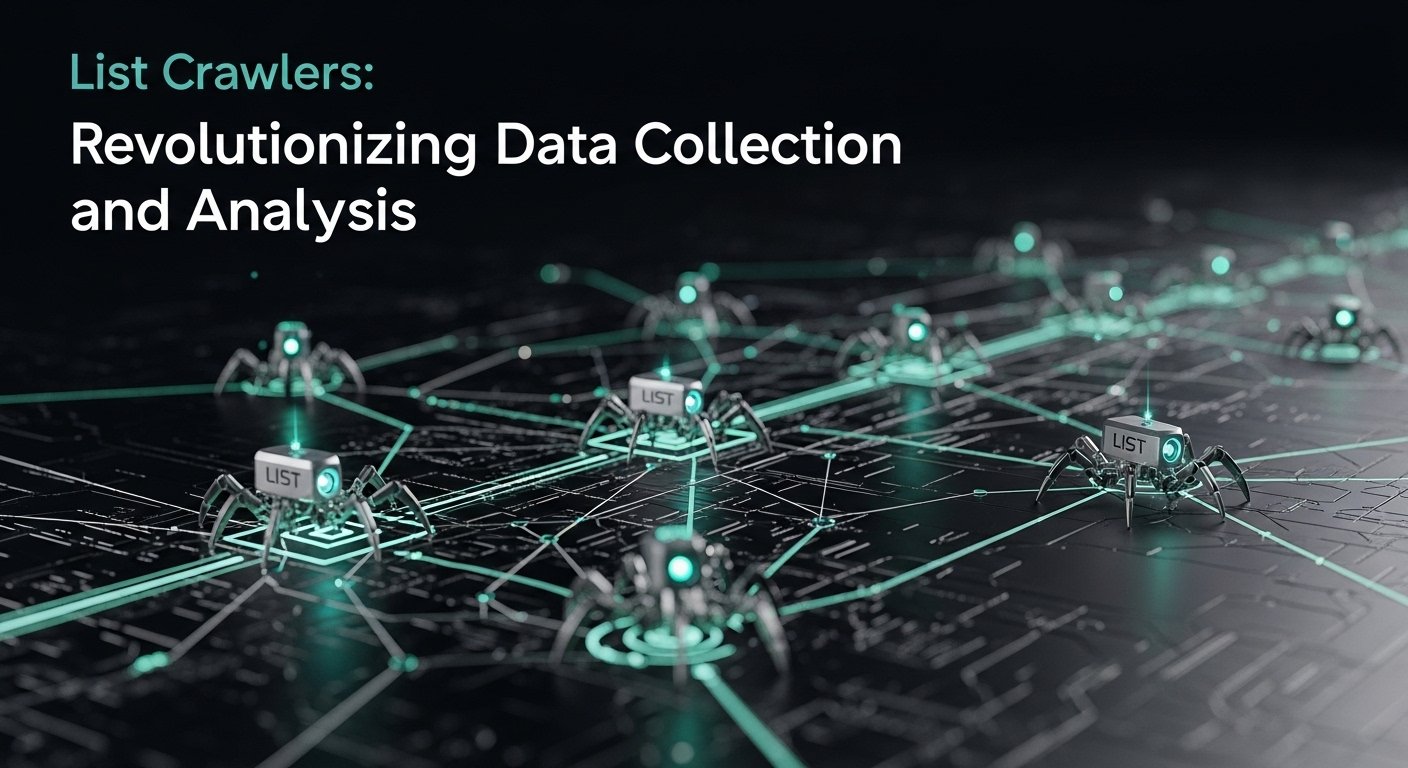
In today’s data-driven world, businesses and researchers are constantly seeking tools that can streamline the process of data collection and analysis. List crowlers have emerged as a groundbreaking solution, providing an efficient way to gather structured information from vast sources across the internet. Unlike traditional methods, these innovative tools reduce the time, effort, and resources required to collect data, making them indispensable for modern enterprises looking to gain actionable insights. From enhancing market research to optimizing customer engagement strategies, the capabilities of List crowlers are transforming the landscape of data analytics.
Understanding the Concept of List crowlers
At their core, List crowlers are software solutions designed to systematically navigate websites and databases to extract relevant information. These tools use automated scripts to access multiple pages, collect structured datasets, and organize them into readable formats such as CSV, Excel, or JSON. By removing the need for manual data extraction, organizations can focus on interpreting the information rather than spending hours on data collection.
A typical use case involves gathering contact information for marketing purposes, monitoring competitor offerings, or compiling product details for e-commerce platforms. The efficiency of List crowlers lies in their ability to handle large-scale datasets with minimal human intervention, ensuring data accuracy and consistency.
The Benefits of Using List crowlers in Business
Businesses that leverage List crowlers gain significant advantages over those relying on manual or semi-automated methods. First and foremost, these tools save valuable time, allowing teams to redirect their efforts towards strategic decision-making. Additionally, the automation ensures consistent data quality and reduces the risk of human error.
Another critical benefit is scalability. Companies can deploy List crowlers to gather information from thousands of sources simultaneously, a task that would be impossible using traditional approaches. Whether it is for lead generation, market trend analysis, or sentiment tracking, the versatility of these tools makes them indispensable for modern business operations.
| Feature | Description | Benefit |
|---|---|---|
| Automated Data Extraction | Uses scripts to collect data from multiple sources | Saves time and resources |
| Multi-format Output | Exports data in CSV, Excel, JSON | Ensures compatibility with analytics tools |
| Scalability | Handles large datasets simultaneously | Supports enterprise-level operations |
| Accuracy | Reduces manual errors | Provides reliable insights |
How List crowlers Transform Data Analysis
The power of List crowlers extends beyond data collection. Once the data is compiled, it can be seamlessly integrated into analytics platforms to uncover patterns, trends, and correlations. For instance, marketing teams can analyze consumer behavior across different demographics, while financial analysts can track market fluctuations in real time.
By automating the extraction of real-time data, businesses gain a competitive edge. Insights derived from List crowlers enable companies to respond proactively to market changes, optimize pricing strategies, and tailor offerings to specific customer segments. Moreover, the historical data gathered can be used to train predictive models, enhancing forecasting accuracy for future business decisions.
Applications Across Industries
The applications of List crowlers are vast and span multiple industries. In e-commerce, they facilitate product monitoring, price comparison, and customer sentiment analysis. Retailers can track competitors’ inventory and pricing strategies to adjust their own offerings accordingly.
In the financial sector, are used to extract stock prices, news updates, and economic indicators, which feed into algorithms for investment strategies. Researchers and academic institutions employ these tools to collect large datasets for social studies, surveys, and scientific research. Even healthcare organizations use List crowlers to monitor medical trends, patient feedback, and emerging treatments.
| Industry | Use Case | Outcome |
|---|---|---|
| E-commerce | Product tracking, price monitoring | Improved competitive strategy |
| Finance | Stock analysis, market trend collection | Data-driven investment decisions |
| Research | Survey compilation, social trend monitoring | Efficient large-scale studies |
| Healthcare | Patient feedback analysis, treatment trend tracking | Better healthcare insights |
Future Trends in List crowlers Technology
This evolution will allow businesses to move from basic data collection to intelligent decision-making based on predictive analytics. Additionally, the rise of cloud-based solutions means that can operate at a global scale, accessing data across regions in real time. The combination of automation, intelligence, and scalability ensures that List crowlers will remain a cornerstone of data-driven strategies for years to come. Organizations that adopt these tools early are likely to experience a significant competitive advantage.
Conclusion
Their automation capabilities, combined with scalability and accuracy, make them essential tools for businesses, researchers, and organizations across industries. By integrating these tools into daily operations, companies can gain deeper insights, make informed decisions, and maintain a competitive edge in a fast-paced, data-driven world.
As industries continue to evolve and the volume of data grows exponentially, will play an increasingly vital role in shaping strategies and driving innovation. Investing in these tools today means building a foundation for smarter, faster, and more efficient decision-making tomorrow.
-

 Health2 weeks ago
Nerovet ai Dentistry: Transforming Diagnosis and Treatment
-
 Digital Marketing1 month ago
Facwe: The Impact on Modern Digital Communication
-

 Social Media1 month ago
Ironmartonline Reviews: What Real Customers Are Saying
-
 Celebrity1 month ago
Erny Huelke: How His Vision Continues to Inspire Today
-

 Technology2 weeks ago
Voozon: What Sets It Apart in the Social Media Landscape?
-
 Fashion2 months ago
Fapell: Game Changer for Creators and Businesses
-

 business2 weeks ago
Adswynk com: Revolutionizing Digital Advertising for Small Businesses
-

 Lifestyle3 weeks ago
Pirate Costume Costume: From Classic Films to Modern Celebrations